7.1. What is Narula’s core strategy for sustainability and recycling of its products?
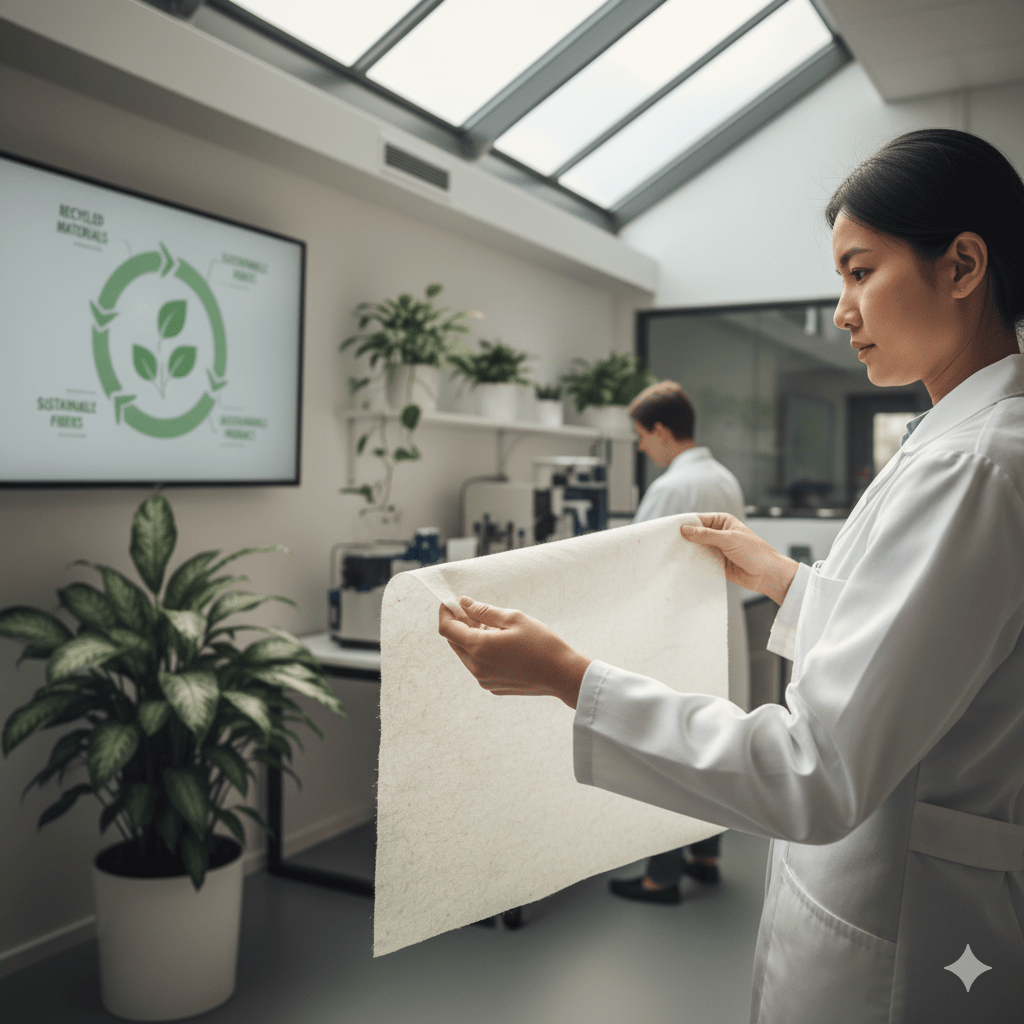
Sustainability has become a critical property in the nonwovens sector, driven by consumer demand and global legislation, particularly concerning single-use products. Narula addresses this through a commitment to the circular economy model, primarily centered on its recycled nonwoven line, which incorporates up to 80% recycled polypropylene fibers. This effort is supplemented by continuous optimization of manufacturing processes designed to minimize waste and energy consumption.
While PP is technically recyclable, the industry faces challenges related to low recycling rates, largely due to product complexity, contamination risk, and limited collection infrastructure. By focusing on manufacturing durable, long-life products from recycled material, Narula channels the pure PP waste stream into applications where material integrity is maintained over time, offering a verifiable sustainable alternative.
7.2. What nonwoven materials are biodegradable or compostable?
To address the high demand for disposable products with low environmental impact, sustainability efforts often shift toward bio-based feedstocks:
- Natural/Cellulosic Fibers: Materials such as Viscose (a wood-derived cellulose fiber) and Cotton offer natural biodegradability and compostability. Viscose, in particular, is highly valued for its superior softness and rapid absorbency, making it a sustainable choice for disposable wipes and hygiene components.
- Bio-Polymers: Polylactic Acid (PLA) is a biopolymer derived from renewable sources like cornstarch. PLA fibers offer impressive performance characteristics, including excellent tensile strength and durability, while being designed to fully degrade into carbon dioxide and water under industrial composting conditions. Research suggests that PLA nonwovens can be strategically blended with natural fibers to optimize properties like strength and controlled degradation rates for specific applications, such as agricultural mulch.
7.3. What is the EN 13432 standard for compostability and why is it crucial for bio-based materials?
EN 13432 is the key European standard that defines the requirements for packaging and products to be considered recoverable through composting and biodegradation. Certification to this standard provides consumers and regulators with confidence that a material will break down into benign natural elements (water, carbon dioxide, and biomass) without leaving toxic residues.
The testing criteria for EN 13432 are strict and comprehensive:
- Biodegradation Rate: The material must achieve ≥90% biodegradation through microbial conversion within a specific timeframe (usually 6 months).
- Disintegration Rate: After being mixed with organic waste, no more than 10% of material fragments can be larger than 2 mm after 12 weeks.
- Ecotoxicity: The resulting compost must demonstrate minimal negative effects on plant growth (ecotoxicity) and maintain acceptable levels of heavy metals.
For any manufacturer targeting the European market with bio-based disposables, compliance with EN 13432 is a mandatory requirement to legally claim compostability and ensure adherence to sustainability goals.
7.4. What is the benefit of using Super Soft Products in nonwovens?
Super Soft fibers are specialty engineered filaments using an additive masterbatch used during the polymerization stage. This engineering provides several significant advantages, particularly for hygiene and soft goods.
The primary benefit is enhanced softness along with improved drape. Supersoft filaments are crucial for creating high-loft airlaid nonwoven like effect in the SMS or SSS fabric with superior touch, cushiony softness, and excellent wet pad integrity during the use in Diaper or Sanitary Napkin applications.